Guide
The two numbers: how to measure a waist and an inseam that fit
A tape around trousers that already fit beats a tape around a stomach. Here is the method, the places it goes wrong, and what the numbers on this site actually refer to.
Every pair on this site is listed as two numbers. The first is the waist in inches, the second is the inseam. A pair marked 38x32 is built to a thirty eight inch waistband and a thirty two inch inside leg. That sounds simple enough to skip, and skipping it is the single most common reason a pair goes back.
The trouble is that the first number is not your stomach. It is the trouser. A man who buys a belt at thirty four and trousers at thirty eight is not confused. He is measuring two different things in two different places. So the method below starts with a pair you already own.
Measure the trousers, not the man
Find a pair that fits you now, at the waist, buttoned. Lay them flat on a table, front up, and smooth the waistband so it lies straight without stretching it. Put the end of the tape at one edge of the waistband and run it to the other edge. Multiply by two. That is the waist measurement of the trousers, and it is the number that matches the label.
For the inseam, keep the trousers flat and fold one leg back so the crotch seam is exposed. Put the tape at the point where the four seams meet and run it down the inside of the leg to the bottom of the hem. Do not stretch the leg and do not follow the outside seam: the outside seam is four to six inches longer and has nothing to do with the label.
- Tape flat, trousers flat, waistband unstretched.
- Waist is half the waistband, doubled. Inseam runs crotch seam to hem, inside the leg.
- Round to the nearest even inch. Trouser sizes are even numbers, and there is no thirty seven.
- Write both numbers down before you start reading product pages. It stops the guesswork.
If you have no trousers that fit, a body measurement will do as a starting point, but treat it as a starting point. Run the tape around yourself where you actually wear the waistband, which for most working trousers is at or just below the navel rather than at the narrowest point. Add nothing. The maker has already added the ease.
From the range
Pairs to try the numbers on
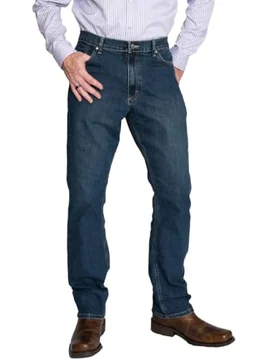

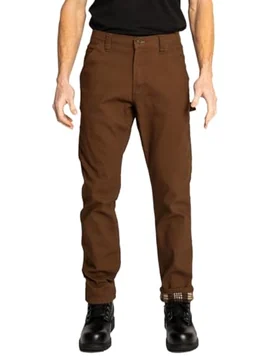
Carpenter Fleece Lined Canvas Stretch Performance Pants, Regular Fit, Utility Pocket & Hammer Loop, Brown, Dark Brown
Waist 38-44 · 30-34" inseam · Regular fit 4.6 out of 5 (22 for this model) $29.99 - $34.99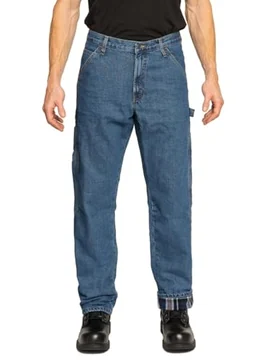
Carpenter Flannel Lined Denim Jeans, Relaxed Fit, Utility Pocket & Hammer Loop, Light Wash, Light Stonewash
Waist 56-60 · 32" inseam · Relaxed fit 4.5 out of 5 (53 for this model) $39.99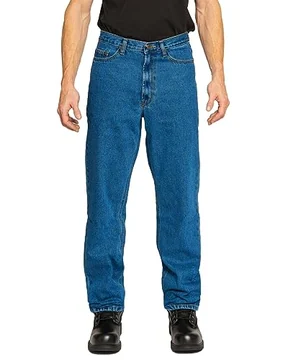
5 Pocket Denim Jeans, Relaxed Fit, Light Wash
Waist 32-60 · 30-36" inseam · Relaxed fit 4.4 out of 5 (437 for this model) $19.99 - $24.99What the inseam decides
The inseam decides where the hem lands on the boot, and that is a practical matter rather than a cosmetic one. Too long and the hem drags, wears through at the back and catches on a ladder rung. Too short and the leg rides up over the boot the moment you kneel.
Work out the length you want by standing in the boots you actually wear. The hem wants to sit on the top of the boot with a single break in the fabric. If you kneel a lot, one inch longer is a reasonable trade, because the leg lifts when the knee bends.
| Inseam | Colourways that offer it |
|---|---|
| 28 inch | 11 colourways |
| 30 inch | 25 colourways |
| 32 inch | 30 colourways |
| 34 inch | 22 colourways |
| 36 inch | 8 colourways |
That table is counted from this catalogue rather than from a general chart, and it shows the shape of the real world: 32 inches is the length most lines carry, 36 inches is the one to check for before you settle on a cut. If your leg is at the short or long end, pick the cut second and the length first.
Where the method goes wrong
Four mistakes account for most of the returns, and none of them are about the trousers.
The first is measuring over clothes. A tape over a shirt and a belt reads an inch and a half high, and an inch and a half is a whole size. The second is pulling the tape tight, which reads low by about the same amount in the other direction. Between the two there is a three inch swing, which is two sizes.
The third is measuring an old pair that has stretched. Denim and cotton twill both give at the waistband over a couple of years, and a pair you have worn since 2023 may be reading a size larger than it left the factory. If the pair you are measuring is old and loose, measure a newer one.
The fourth is the outside seam. It is easy to reach and it is the wrong seam. If your number came out at thirty eight or forty for the leg, you measured the outside.
Stretch changes the answer a little
Some pairs in this range are cut in a cotton and spandex blend, and the maker calls those performance stretch on the label. Of the 78 colourways live here, 32 carry that word. A stretch waistband gives about an inch under load, which means a pair that is slightly tight will feel right after an hour and a pair that is slightly loose will stay loose.
The side elastic styles go further: the waistband has a panel of elastic at each hip, and 8 colourways here have it. That panel is worth two inches in practice and it is the reason the big sizes in this catalogue fit a wider range of men than the label suggests. It is also the reason a belt behaves differently on them, because the elastic moves and the belt does not.
Plain cotton does the opposite. It gives nothing on the first wearing and a little after the third wash, and if a pair is tight in the shop it will be tight in a month. On a plain cotton pair, size for the day you are wearing it rather than for the week you plan to lose weight.
From the range
Stretch and side elastic pairs
Carpenter Fleece Lined Canvas Stretch Performance Pants, Regular Fit, Utility Pocket & Hammer Loop, Brown, Dark Brown
Waist 38-44 · 30-34" inseam · Regular fit 4.6 out of 5 (22 for this model) $29.99 - $34.99Carpenter Flannel Lined Denim Jeans, Relaxed Fit, Utility Pocket & Hammer Loop, Light Wash, Light Stonewash
Waist 56-60 · 32" inseam · Relaxed fit 4.5 out of 5 (53 for this model) $39.99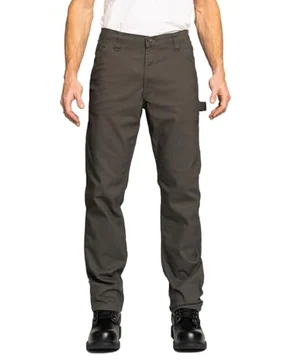
Carpenter Stretch Canvas Pants, Regular Fit, Grey
Waist 34-48 · 30-34" inseam · Regular fit 4.4 out of 5 (240 for this model) $24.99 - $29.99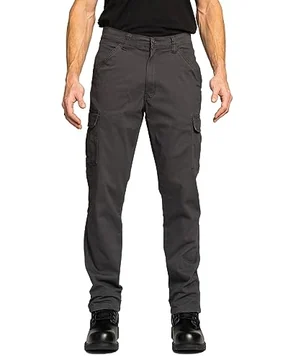
Cargo Stretch Twill Pants, Regular Fit, Grey
Waist 30-50 · 28-34" inseam · Regular fit 4.4 out of 5 (215 for this model) $24.99 - $29.99Big sizes are not a different garment
The waist scale here runs from 30 to 80 inches across 28 distinct waist values. That upper half is the part of the range the brand is actually known for, and it is worth saying plainly what does and does not change as the numbers climb.
What does not change: the cut, the pocket plan, the fabric and the construction. A sixty inch carpenter jean is the same jean as a thirty six inch carpenter jean. What does change is the inseam offering. The longest inseams thin out at the top of the waist scale, and a few of the very largest waists are listed without an inseam at all because the maker sells them in a single length.
So if you are buying at the top of the scale, check the size table on the product page before you decide on a cut. Every page here lists each size that has a live price, with its own figure, and the ones that are not listed are not available rather than merely hidden.
When you fall between two sizes
Trouser waists come in even inches, so half the population measures at an odd number and has to choose. The choice is not a coin toss, and it depends on three things: the fabric, the waistband and the work.
On a plain cotton pair with a fixed waistband, size up. Cotton does not give on the first day, and a waistband that is tight when you are standing will be worse when you sit in a van for forty minutes. The extra inch is taken up by the belt, and a belt is a better adjuster than hope.
On a stretch pair, size down. The blend takes up an inch on its own, and a stretch pair bought a size large will sag at the seat by the middle of the afternoon. On side elastic styles the same logic runs further: the panels give two inches, and a pair bought large has nothing to hold on to.
If the work involves kneeling, crouching or climbing, weight the answer towards the larger size regardless of fabric. A waistband that is comfortable standing can be a real problem on a roof, and nobody has ever complained that their work trousers were a little roomy at the waist.
The first wash, and what the label commits the maker to
A pair of work trousers changes shape once, on the first wash, and then stays where it lands. That is why the care label is worth reading before the first wash rather than after it, and why the law requires it to exist at all.
The label must state whether the product should be washed by hand or machine.Federal Trade Commission, 16 CFR Part 423, Care Labeling of Textile Wearing Apparel, read 12 September 2026
That single sentence is the reason a label can say machine wash cold and nothing else: the rule requires the method and the temperature, not a paragraph. Read it as a boundary rather than a recommendation. A pair labelled for cold water will survive a warm wash and will not survive a hot one every week.
In practice, on the fabrics in this range, three habits keep a pair in shape. Wash cold and inside out, which protects the wash on denim and the print on the bonded linings. Tumble on low or hang them, because heat is what pulls the inseam up half an inch. And wash a lined pair on its own the first time, because fleece sheds and the shed goes somewhere.
The maker's own hedge about shrinkage is pre shrunk in most cases. Take it at face value. On a pre shrunk pair the first wash moves the inseam by a quarter of an inch or less. On a pair that is not pre shrunk, budget half an inch on the leg and a little at the waist, and buy the longer inseam if you are between lengths.
From the range
Lined pairs, where the first wash matters most
Carpenter Fleece Lined Canvas Stretch Performance Pants, Regular Fit, Utility Pocket & Hammer Loop, Brown, Dark Brown
Waist 38-44 · 30-34" inseam · Regular fit 4.6 out of 5 (22 for this model) $29.99 - $34.99Carpenter Flannel Lined Denim Jeans, Relaxed Fit, Utility Pocket & Hammer Loop, Light Wash, Light Stonewash
Waist 56-60 · 32" inseam · Relaxed fit 4.5 out of 5 (53 for this model) $39.99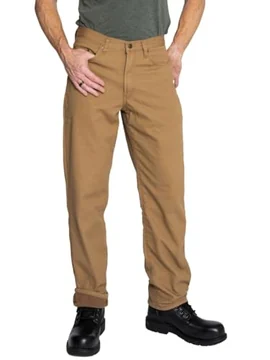
5 Pocket Fleece Lined Twill Pants, Bonded, Relaxed Fit, Hickory
Waist 38-46 · 30-34" inseam · Relaxed fit 4.3 out of 5 (110 for this model) $29.99 - $34.99Checking a pair the day it arrives
Five minutes with the trousers on saves a month of not wearing them. Put them on over the underwear and with the belt you intend to use, then do four things before the tags come off.
- Sit down on a hard chair. The waistband should press, not bite, and the seat should not pull at the back pockets.
- Kneel on one knee. The hem should still cover the boot top, and the knee should not feel stretched across.
- Reach up as if for a shelf. The rise should stay put rather than dragging the waistband down.
- Load the pockets you will actually use. A phone in a side pocket changes how a cargo leg hangs, and a tape measure on a hammer loop pulls a carpenter jean to one side.
If the pair fails the sitting test, it is the wrong waist. If it fails the kneeling test but passes the rest, it is the wrong inseam, or the wrong cut for the work. Those are different problems with different answers, and the size table on each page here is laid out so you can change one number without changing the other.
Why the tape and the label sometimes disagree
Two pairs marked thirty eight, from two makers, can measure an inch apart at the waistband. That is not a fault. Cut and sew tolerance runs about half an inch either side of the target on volume workwear, and different makers set the target differently for the same label.
What that means for buying: the label is a shelf address rather than a measurement. It tells you where a pair sits on the rack. If you have a pair from this maker that fits, another pair from the same maker in the same number will fit the same way, and that is most of what the number is for.
It also means a measurement taken from a competitor's trousers is a rough guide here rather than an exact one. If you are moving between makers and you land on an odd number, use the fabric rule above to break the tie.
Reading the size table on a page here
Every product page on this site ends with a table of the sizes that are actually buyable in that colour, each with its own figure and its own button. It is worth knowing how to read it, because it is not a size chart in the usual sense.
A row exists only when that exact waist and length has a live price. When a size sells out, the row goes, and when it comes back the row comes back with it. That is why two colours of the same cut can show different tables on the same day: they are separate pages with separate stock.
The figures in the table are per size rather than per line, and they are not always equal. On several cuts here the largest waists carry a higher figure than the middle of the range, which is ordinary in this trade and not a surcharge we apply. The table shows the number for the exact pair you are buying, which is the only number worth showing.
If the size you want has no row, the honest answer is that we cannot sell it to you today, and the page says so by leaving it out rather than by showing a greyed button. Checking back is the only remedy, and the prices page carries the date of the last update so you know how fresh that answer is.
Buying a pair for somebody else
Buying work trousers as a present is a good way to buy the wrong thing, and the failure is almost always the inseam rather than the waist. People know their waist number and guess their leg.
If you can get at their wardrobe, measure a pair that is in rotation rather than the pair at the back, and read the label as well as the tape. If the two disagree, believe the tape: the label may belong to a maker who cuts generously.
If you cannot get at their wardrobe, buy the cut and the colour and let them pick the numbers. Work trousers are one of the few garments where the size is genuinely the decision and everything else is taste, so the gift is the choice of cut, not the choice of size.
One practical note on the big sizes. Someone who takes a fifty four in the waist has usually had a long run of shops that carry to forty eight and then apologise. It is worth saying out loud that the pair you bought came off the same shelf as everything else, because that is the part that tends to matter.
What we cannot tell you
There is no body measurement chart on this site that converts a chest or a hip into a trouser size, and there is not going to be one. Those charts vary by maker, and publishing one for trousers we did not cut would be inventing a fact. The maker states the waist and the inseam, and we print those.
We also cannot tell you how a pair will fit after six months. Shrinkage is the maker's territory and the maker hedges it, saying pre shrunk in most cases rather than always. That hedge is in the maker's own wording and we keep it rather than tidy it into a promise.
If a page here says nothing about a measurement, it is because the maker published nothing about it. An empty row is more use than a filled one that turns out to be guesswork.
Sources
- Federal Trade Commission, 16 CFR Part 423, Care Labeling of Textile Wearing Apparel, read 12 September 2026